We turn flexible work initiatives into measurable economic value. Discover how much hidden salary you may be paying—without even realizing it.

MID-SIZED COMPANY IN ITALY IN THE PHARMA SECTOR
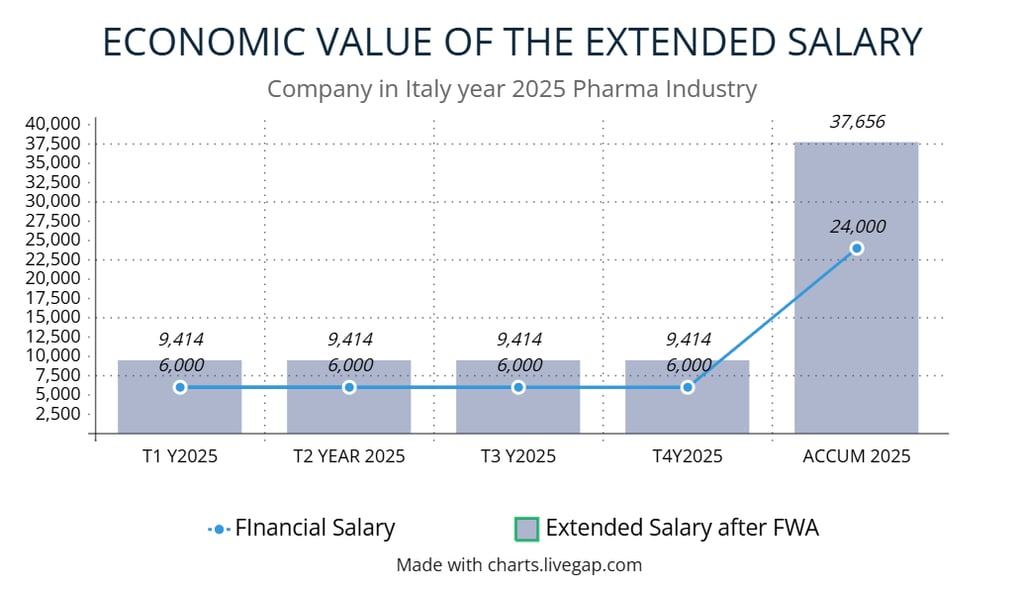
WE FOUND THAT 20% FLEXIBLE WORK CONTRIBUTES A 56% IMPACT ON EXTENDED PAY
What happens if a company applies flexible work assignments to a total of 20% of the employee's time in a company where:
The average net salary is €2,000/month, in total that represents €24,000 per year.
Most of its employees are in their 40s and 50s
Those same employees don't have major debt problems
The average number of dependents for each employee (children in this case) is 1, showing normal family responsibility, where a couple of people (father and mother) take care of that dependent child.
The employees of this company subjectively and moderately value the value of their free time over their working time.
We also know that by using that 20% of the time of remote work or through flexible work, the employee can save about €3000 per year, since they save on travel and other costs derived from going to work.
The employees of this company are, in most cases, in good health.
Our research shows that while the average financial salary is €24,000 net per year, the extended salary, i.e. the economically quantified benefit obtained by employees, is €37,656, 56%.
Did you know that your efforts to make work flexible make employees earn more than you think?
Econtime Consultants is a Service of Copra International LLC
info@econtime.eu
https://econtime.eu
16192 Coastal Hwy, Lewes, DE 19958, United States
© Copyright Econtime Consultants. All rights reserved